
Fat freezing may reduce a suitable local fat bulge, but it should not be relied on to correct loose skin, cellulite or abdominal muscle separation. These concerns can overlap in the same area. A consultation needs to establish which tissues contribute to the appearance you want to change, and whether reducing fat would address your main concern. The American Academy of Dermatology’s fat-removal guide treats loose skin as a separate consideration in assessment.
You do not need to arrive with a diagnosis. Describing what bothers you — fullness, a fold, dimples or a change following pregnancy — is more useful than deciding that everything visible must be fat.
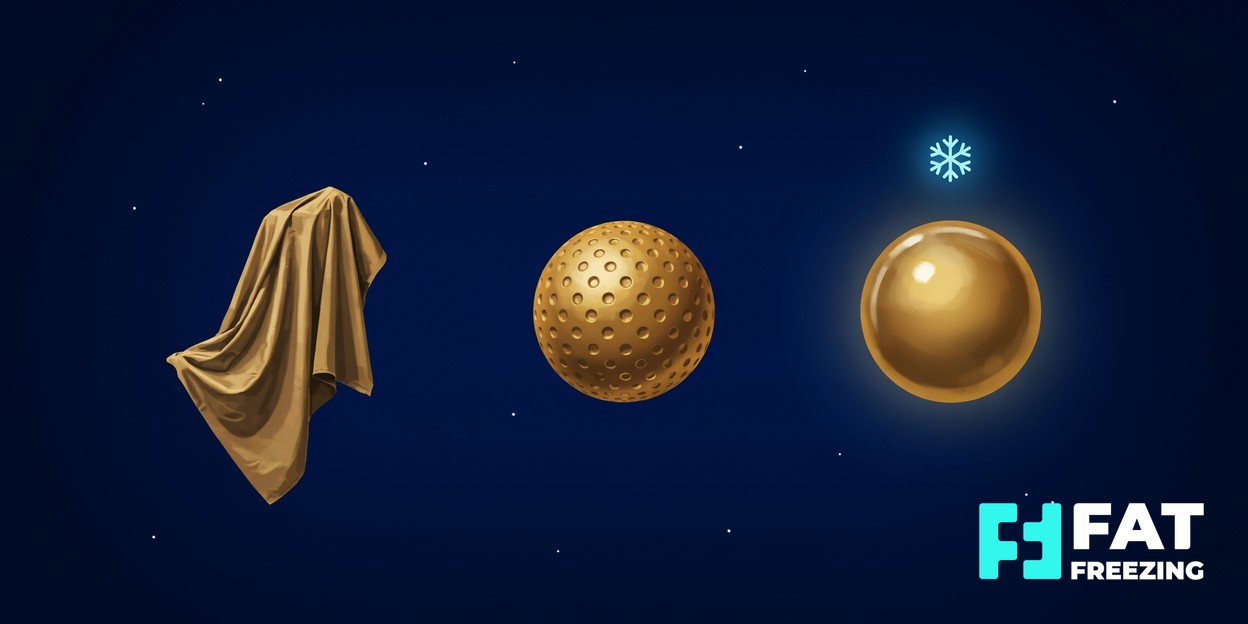
Four concerns that can share one outline
A local fat bulge
Subcutaneous fat is the fat layer beneath the skin. Cryolipolysis uses controlled cooling to injure selected fat cells there; the body gradually clears the affected cells. Its purpose is local contouring, rather than overall weight loss, obesity treatment or treatment of the deeper fat around internal organs. See the FDA’s explanation of fat freezing.
The presence of a fold you can hold does not establish suitability. Skin is part of that fold too, and an examination needs to consider the underlying area and your medical history. Our suitability guide explains that assessment in more detail.
Loose skin
Skin laxity means looseness of the skin. Your concern might be how it hangs or gathers, rather than the amount of fat underneath it. Removing some underlying volume does not remove excess skin, so a reduction in fullness cannot be assumed to give the firmer surface you had in mind.
The useful question is therefore whether fat reduction alone would be worthwhile to you. If your priority is the skin fold, tell the practitioner that explicitly. The AAD recommends considering loose skin when assessing non-invasive fat removal; it is not simply another name for a fat pocket.
Cellulite
Cellulite describes surface dimpling, often on the thighs or buttocks. Connective-tissue bands beneath the skin contribute to its uneven appearance. It is common, including in people who are very fit, and is different from a single protruding pocket of fat.
This distinction matters when the goal is smoother skin. The AAD’s cellulite guidance does not recommend cryolipolysis for cellulite. A treatment may reduce local fullness while the dimples remain. Neither outcome tells you that the other concern has been corrected.
Abdominal muscle separation
Diastasis recti is widening between the two sides of the rectus abdominis muscles at the front of the abdomen. During pregnancy, the central connective-tissue band, called the linea alba, stretches; separation can persist afterwards. It can affect abdominal function as well as appearance, as explained in Royal United Hospitals Bath’s patient information.
Cooling surface fat cannot bring those muscles together. Persistent doming, discomfort or uncertainty after pregnancy merits discussion with your GP or an appropriate physiotherapist. Do not use photographs or a home pinch test to decide whether a bulge is fat, separation or something else.
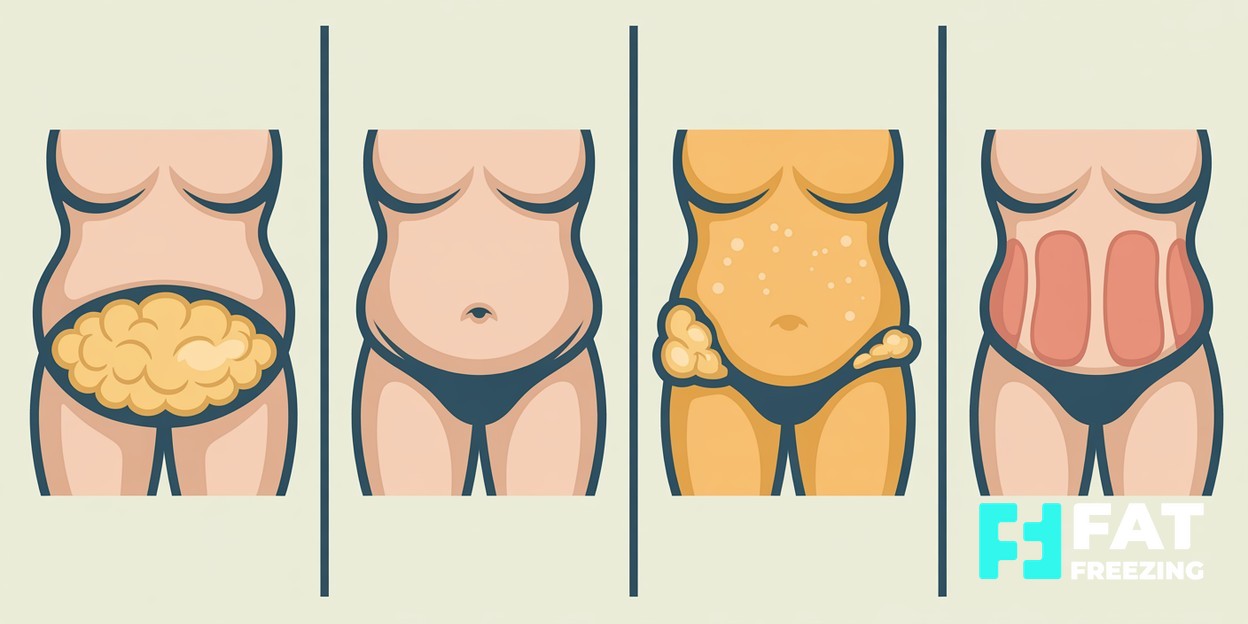
Simplified illustration of different concerns to discuss, not a diagnostic guide.
Why a smaller measurement may not answer your question
Imagine that your main concern is a hanging fold. A measurement showing less fat beneath it would answer a question about fat thickness; it would not establish that the fold had tightened. Similarly, a smaller thigh circumference would not demonstrate that cellulite dimples had improved.
Before consenting, ask which outcome the proposed plan is intended to change. Terms such as “contouring”, “firming” and “smoothing” can sound interchangeable, but you may attach different expectations to each. Ask the practitioner to use ordinary descriptions of the likely change and its limits.
Changes after non-invasive fat removal develop gradually, and individual results vary. The AAD describes this gradual response, but waiting longer should not become a promise that an unrelated skin concern will eventually resolve.
What about claims that freezing stimulates collagen?
There is research into skin changes, but it requires careful interpretation. A small primary feasibility study examined tissue from seven participants treated before planned abdominal surgery. Samples taken three days to five weeks later showed increases in markers associated with collagen production compared with untreated tissue.
The study was non-randomised, used a particular CoolSculpting protocol and had manufacturer involvement. Microscopic markers offer a possible explanation for skin changes; they do not establish predictable, lasting tightening for someone with loose abdominal skin. The authors called for larger research with randomised treated and untreated areas.
A separate claim comes from CoolSculpting’s US manufacturer information: specified systems have an indication concerning the appearance of lax tissue following treatment under the chin. That is a device- and site-specific indication. It cannot be extended to every machine, the abdomen or all forms of skin laxity. It also does not establish which equipment a Cardiff clinic uses or its UK regulatory status.
Bring the concern, then ask about the target
Use this table as a conversation aid, not a way to identify your own condition. You may recognise more than one concern.
| What you want to discuss | A useful consultation question |
|---|---|
| Local fullness | “Which tissue is contributing to this bulge, and is any of it a suitable target for this device?” |
| A hanging or gathered fold | “How much of my concern is loose skin, and what would remain if only the fat changed?” |
| Surface dimples | “Are we discussing cellulite or fat volume, and what evidence supports the proposed outcome?” |
| Abdominal changes after pregnancy | “Do I need an abdominal-wall assessment before any cosmetic treatment?” |
| Several concerns together | “Which part might improve, which might remain, and would that meet my goal?” |
Ask what would make the practitioner advise against treatment. Choosing to leave an area untreated is a valid outcome when the likely change does not match your priority.
Safety remains part of that decision. The FDA warns against fat freezing near a pre-existing hernia or structurally weak abdominal area. Temporary bruising, swelling and discomfort can occur; uncommon complications include burns and paradoxical adipose hyperplasia, where treated fat enlarges and hardens, sometimes months later. This does not normally resolve by itself and may require surgery. Our side-effects and PAH guide covers these risks separately.
For a Cardiff enquiry, bring your priorities and relevant medical history to the discussion. The Cardiff clinic page lists 28 Cathedral Road, Cardiff, CF11 9LJ; you can contact the team with questions before arranging a visit.
Sources and further reading
- FDA: Non-Invasive Body Contouring Technologies.
- American Academy of Dermatology: Non-invasive fat removal — what can you expect?.
- American Academy of Dermatology: Cellulite treatments — what really works?.
- Royal United Hospitals Bath NHS Foundation Trust: Abdominal muscle separation.
- Stevens and colleagues: Molecular and Histological Evidence Detailing Clinically Observed Skin Improvement Following Cryolipolysis.
- CoolSculpting: US uses and important safety information.
Frequently Asked Questions
Can fat freezing tighten loose skin on my stomach?
It should not be relied on to correct loose abdominal skin. Cryolipolysis targets local fat, and early research into skin changes does not establish dependable tightening for an individual. Have skin laxity assessed separately.
Will fat freezing remove cellulite from my thighs?
Fat reduction and cellulite improvement are different outcomes. The American Academy of Dermatology does not recommend cryolipolysis for cellulite; reducing a nearby fat bulge does not mean its dimples will disappear.
Does the under-chin skin claim apply to every fat-freezing machine?
No. The US manufacturer indication concerns the appearance of lax tissue following submental treatment with specified CoolSculpting systems. It is not evidence that all cryolipolysis devices tighten skin across the body.
Can fat freezing repair abdominal muscle separation?
No. Muscle separation involves the abdominal wall rather than the surface fat layer. Persistent doming or concerns after pregnancy should be discussed with a GP or appropriate physiotherapist before cosmetic treatment is considered.

